
Millions saved for medical schemes and their members
Drickus Maartens • October 14, 2019

Medicine costs reduced through a continuum of care
In just a single year, one South African courier pharmacy company saved the South African healthcare industry over R157 million on medicine costs, contributing to its sustainability through containing medical costs and improving health outcomes for members living with chronic conditions.
“These savings are calculated according to the difference between the product dispensed versus the relevant medical scheme’s reference pricing, and these savings help to keep schemes’ membership contribution increases to a minimum for the following year,” explains Rentia Myburgh, sales and marketing director of Medipost Holdings, which comprises Medipost Pharmacy, Kawari Wholesalers, MediLogistics
and MediTraining Academy.
Medipost Pharmacy currently serves 400 000 medical scheme members on average each month, including close on 180 000 beneficiaries of South Africa’s largest closed medical scheme, which the courier pharmacy company has worked with for over 12 years.
“With a significant and growing proportion of the public requiring long-term medicine for chronic illnesses, this has become a major cost driver for medical schemes and the members they serve. Chronic medicines are a lifeline, yet many people are unaware that there are measures they can take to help reduce the costs associated with treatment.”
Medipost Holdings is able to keep the costs of medicines low due to the large scale of its operations and the fact that the group companies complement each other in a secure value chain.
The group’s in-house supply and distribution service Kawari Wholesalers obtains medicines directly from pharmaceutical manufacturers, while the group logistics company, MediLogistics, transports the medicines to Medipost Pharmacy in accordance with the principles of Good Pharmacy Practice. Once the medicines have been dispensed, MediLogistics transports the patient-ready parcels to medicine collection points and directly to patients, completing the continuum of care.
Medipost Pharmacy’s dispensing fees are considerably below the market average, and customers are not billed for the administrative or courier delivery fee aspects of the service.
“Once an individual has been to their doctor and obtained a prescription, our service allows them to place the order for delivery via our website, email, WhatsApp or even fax, whichever is most convenient for the individual,” she explains.
“Medipost Pharmacy can also assist medical scheme members to ensure that the medicines dispensed are claimed from the appropriate benefit category, which ultimately results in medical scheme members’ benefits and savings, where applicable, being conserved, with the added convenience of free delivery of medicines through MediLogistics,” Myburgh adds.
This year, Medipost Pharmacy introduced self-medication products to its offering, whereby customers can place orders for a wide range of health products that can be bought without a prescription. Orders for these unscheduled products can be placed with a simple telephone call or WhatsApp message. A list of currently available self-medication products can be obtained via email from info@medipost.co.za.
“The Medipost Holdings continuum of care approach is not only saving South African medical schemes millions of rands and preserving members’ funds, but it is also helping to make life-saving medicines more accessible to all. In addition, through enhancing the accessibility of medicines our service assists in supporting treatment adherence among those living with chronic health conditions for better health outcomes,” Myburgh concludes.

15 September marks World Lymphoma Awareness Day, and CANSA is joining the global call to ensure that no person affected by lymphoma has to navigate their diagnosis, treatment, and recovery alone.

There’s a perception that vaping is harmless, but it is highly addictive and poses serious health risks. Pulmonologist Dr Mahomed Seedat warns about the dangers.

The immune system protects us from viruses, bacteria and cancer. According to Dr Lukas Moolman, the goal of a healthy immune system is to be smarter and balanced.
Gastroenterologist Dr Nasief van der Schyff shares seven tips for managing acid reflux and explains when to seek help if you suspect you have GORD (gastro-oesophageal reflux disease).
Many people being treated for cancer may not realise that concentrated vitamins, herbal products and chronic medicines can affect how oncology treatments work

Can’t keep food or fluids down during pregnancy? Dr Peter de Jong warns it’s not ‘just morning sickness’. Dehydration is a medical emergency.

When you spot the warning signs of burnout, it’s time to take action. Occupational therapist Mahlatse Mothogoane points out that paying attention early is crucial.

When Rano Kayser was admitted to hospital with failing lungs, standard ventilation was no longer enough. To prevent organ failure, pulmonologist Dr Hlanjwa Maepa and her team initiated ECMO treatment.

Don't let doomscrolling steal your rest. Mental health and daily productivity rely on quality sleep, notes our clinical psychologist Tony Gouveia
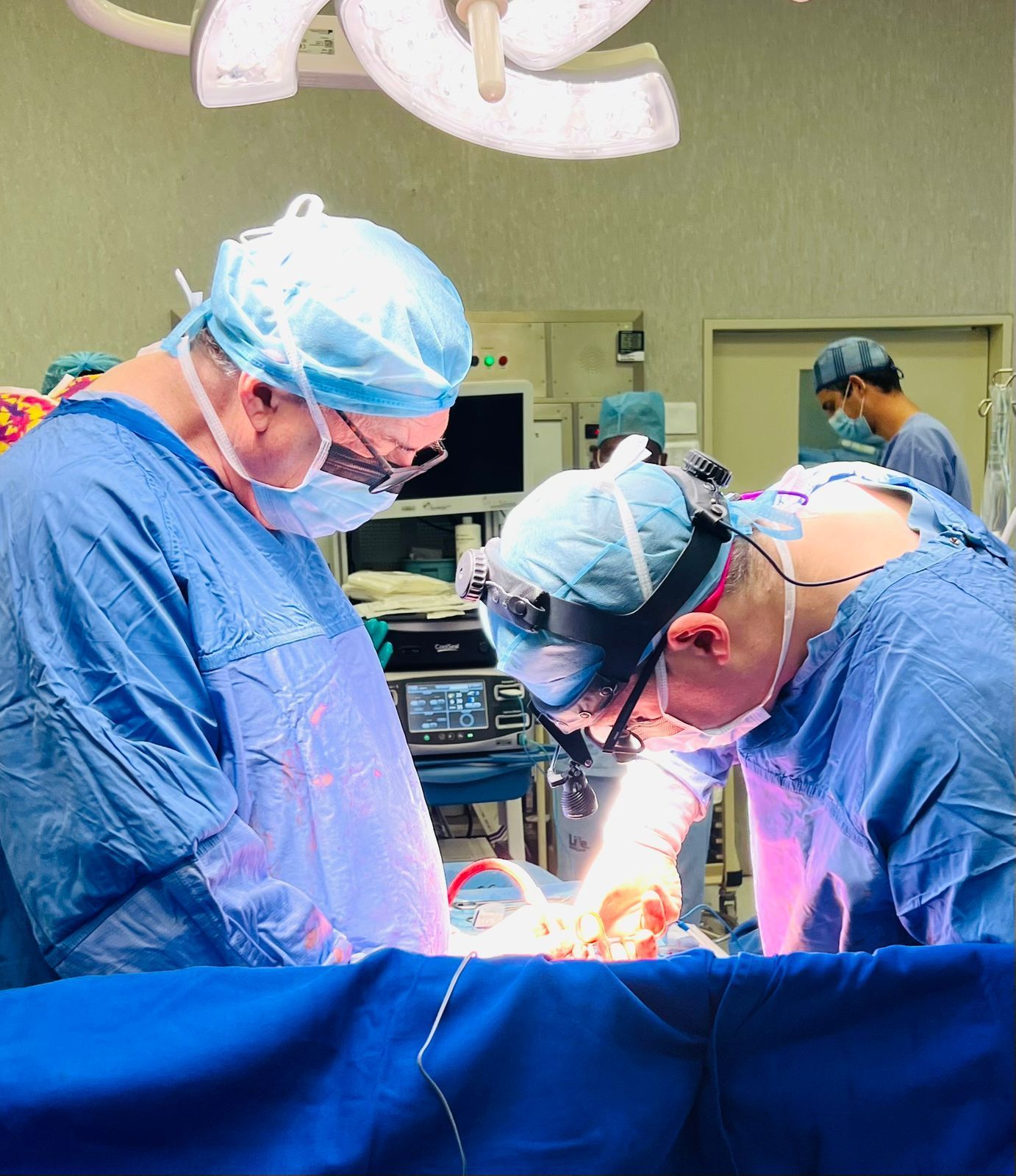
Cardiac surgeon, Dr Willie Koen, now operates alongside his son Johan in what is likely the country’s only father-son cardiac surgery team.