Plastic surgery made all the difference for patient with dog bite injury
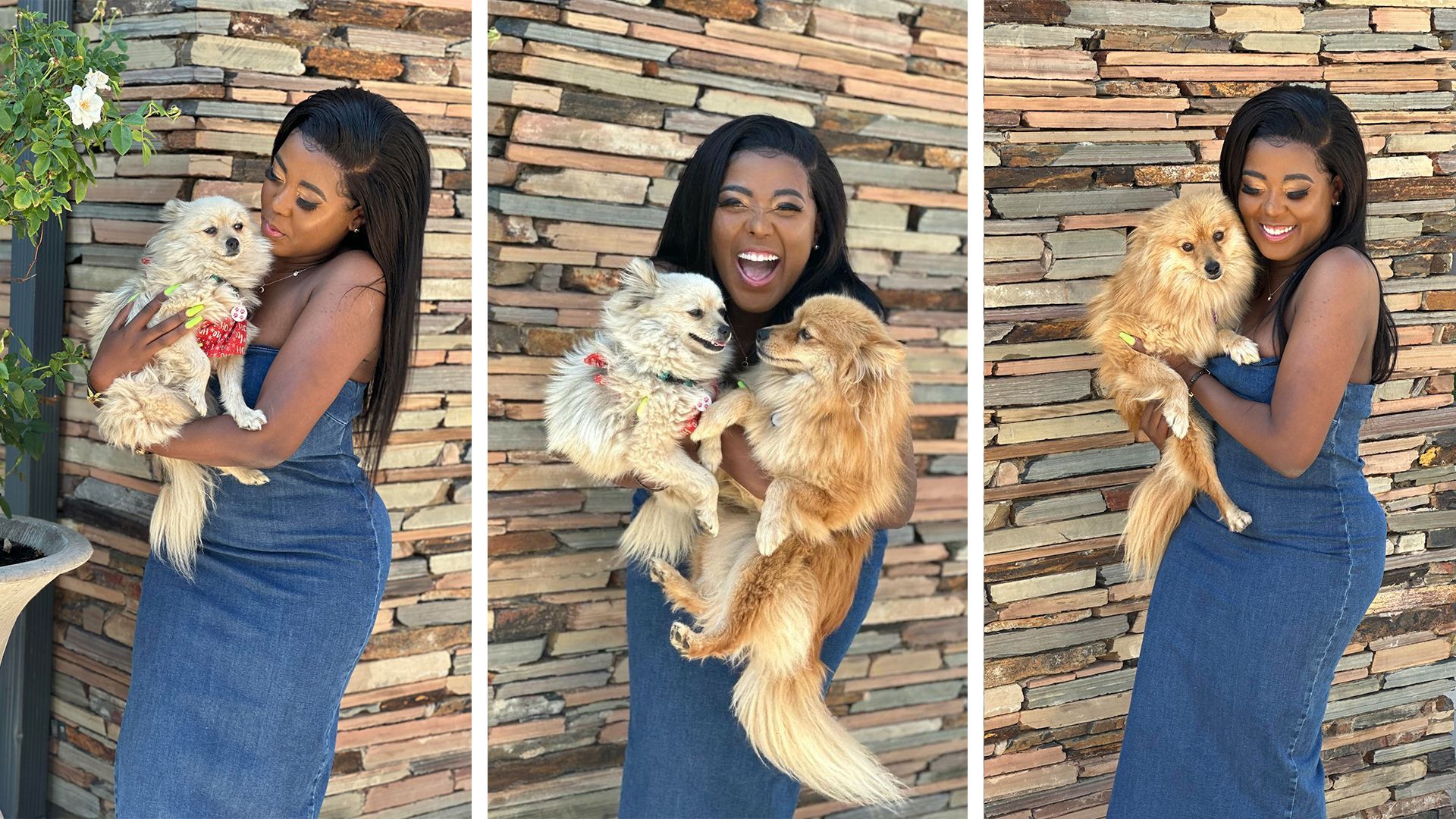
Dr Aobakwe Segwe is pictured with her beloved Pomeranians, Simba and Nala, after recovering from a dog bite to her face requiring plastic surgery with Dr Brian Monaisa at Netcare Pinehaven Hospital.
Serious bite to the nose delays doctor’s 40th birthday celebrations
Turning 40 is a significant life event for any woman, and for Dr Aobakwe Segwe, a specialist radiologist from Midrand, it was no different. She’d planned special celebrations for her 40th birthday in July last year, but just a week before, her hopes for her dream birthday were shattered when an excited young dog caused a serious injury to her face.
Usually the one caring for those needing treatment, Dr Segwe was forced to be on the other side of medical care as a patient, when her attempt to pet a relative’s seemingly-friendly dog resulted in a serious injury to her nose.
Dr Segwe explains: “My cousin owns a spirited one-year-old Doberman, Chase. On that day, he seemed excited and in good spirits. I had no reason to be afraid of him at all. But, when I leaned forward to say goodbye to him, he jumped up towards my face.
“I felt the hard thud as he connected with my nose. It really didn’t feel like he’d bitten me. But, when I looked in the mirror, I saw to my horror that I had a serious injury, and through the wound I could see my nasal bone. We rushed straight to the emergency department at Netcare Pinehaven Hospital in Krugersdorp.”
For her, it was a humbling and profound experience being on the other side of the doctor patient relationship. Dr Segwe says the staff leapt into action and took care of her immediate medical needs, even before they began the administrative part of her admission.
“Although I was in some distress, I knew I had to keep calm. Later in the surgical ward, the highly skilled and compassionate staff took wonderful care of me.” She stayed at the Netcare Pinehaven Hospital for a week, under the care of world-renowned plastic surgeon, Dr Brian Monaisa.
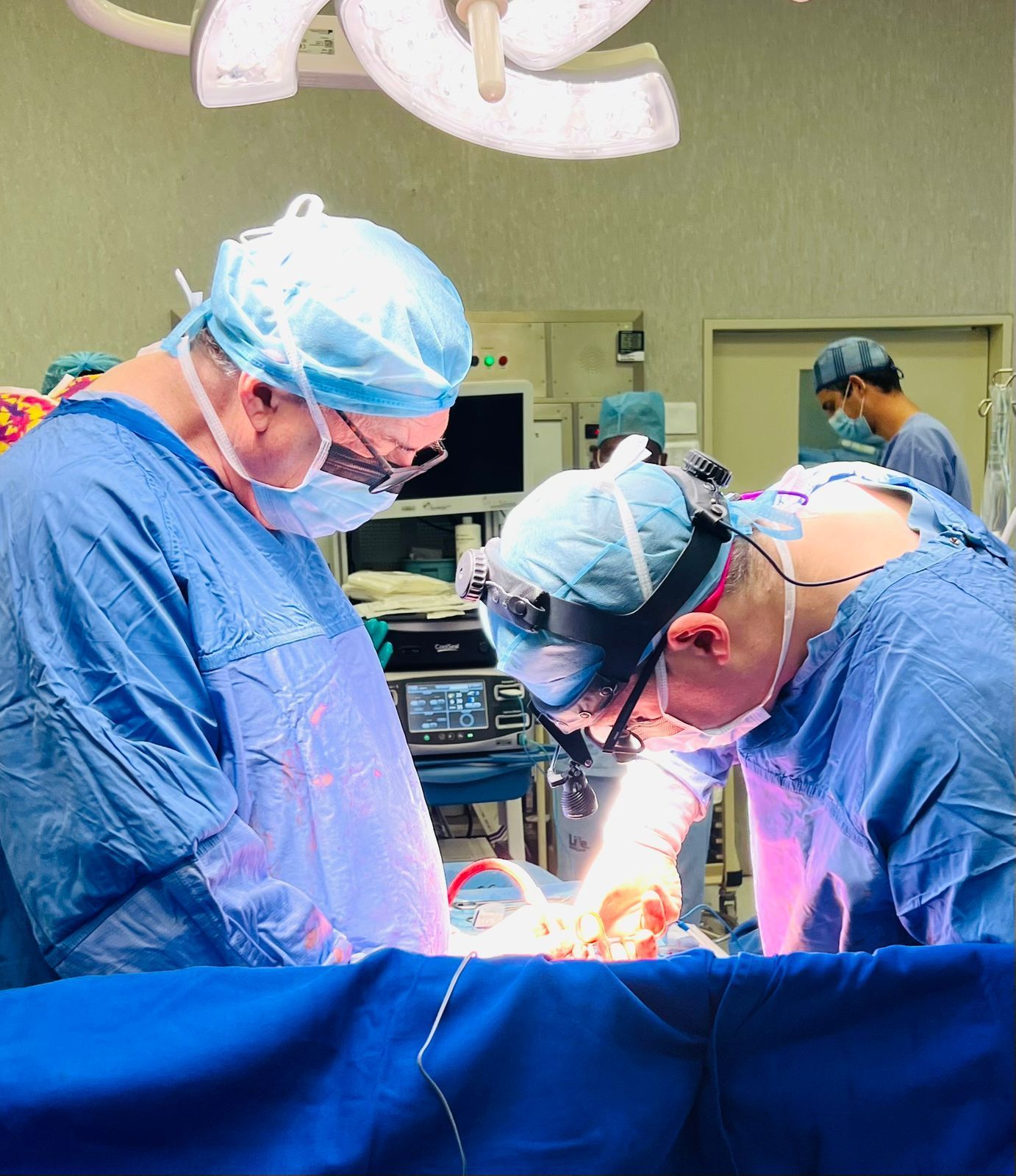
In theatre that Monday, Dr Monaisa examined Dr Segwe and based on what he saw, devised a care plan for the way forward.
Dr Monaisa described the bite wound as “quite devastating”. “There was skin and nasal cartilage missing. I had to reconstruct the right half and the tip of the nose. I used a forehead flap, which would be the standard choice to do that.”
Dr Monaisa explained that the procedure involves turning down a piece of skin from the forehead above the eyebrow and pivoting it vertically downwards to resurface the nose. He also used hidden cartilage from Dr Segwe’s ear to help reconstruct her nose.
“With Dr Segwe’s 40th birthday fast approaching, our problem was that you have to wait three weeks before you can attach the forehead flap. That can be emotionally difficult for the patient and this is where patient counselling becomes very important,” Dr Monaisa says.
“We did the flap division four weeks later and this was followed by a couple of minor touch ups. With black skin, hyper-pigmentation can be a problem but this was addressed with topical treatment and we achieved a good result.”
For Dr Monaisa, the best part of his job is seeing his patients recover and being pleased with the result of their surgery and treatment. “It’s a fantastic feeling. Plastic surgery is not necessarily about treating life or death situations, but rather it’s about the quality of a person’s life,” he says.
“Getting back to Dr Segwe’s case, the nose is in the centre of the face. It’s the first thing people see. An injury like this can affect a person’s self-esteem and image, so it’s really important to do it right. The reward for me is patient satisfaction and a good quality of life. We want to restore the patient’s confidence, so they not only look good, but feel good too.” He explains that it’s also important to tell the patient about any risks attached to the procedure.
Although Dr Monaisa lives some considerable distance away from Netcare Pinehaven Hospital, he says the fact that the hospital is so well run, clean and spacious, means it’s an obvious choice for him to run his busy practice from. “I’ve been here since 2017 and the people and the staff are excellent. There’s just a beautiful vibe here.”
Dr Segwe reluctantly had to take time away from her high-powered job for a few months to recover from her ordeal. “We had to hire an additional radiologist to cover at the practice to ensure there were no disruptions to our services. In our field, there’s no room for error. It was a very stressful period, but fortunately, I’m blessed with an amazing team at the practice.”
After what was a very traumatic injury, Dr Segwe has been left with only a faint scar. “I never thought I’d be in a situation where I’d have to undergo plastic surgery. Being a medical practitioner, you’re acutely aware of all sorts of risks. But, I had faith in my chosen specialist and his team which gave me the confidence that I would get through this.”
Dr Segwe is a doting owner of two adored Pomeranian dogs, Simba and Nala. She admits that the incident with Chase has made her more cautious around dogs. While she was sad that her much-anticipated birthday plans had to be postponed at the time, she has much to look forward to, including a Maldives birthday trip in March and a “girls’ trip” to Italy in July.
A grateful Dr Segwe said her real happy ending was that she was “forced to pause and appreciate every little thing in my life”. “I have a renewed laser focus for what I aim to achieve in life.” She also acknowledged that she has a deepened love and appreciation for her family, friends and colleagues who supported her through her ordeal.
“The exceptional nurses and doctors at Netcare Pinehaven Hospital really carried me through this with their professionalism, gentleness and kindness.”