What your obstetrician sees that an online search can’t
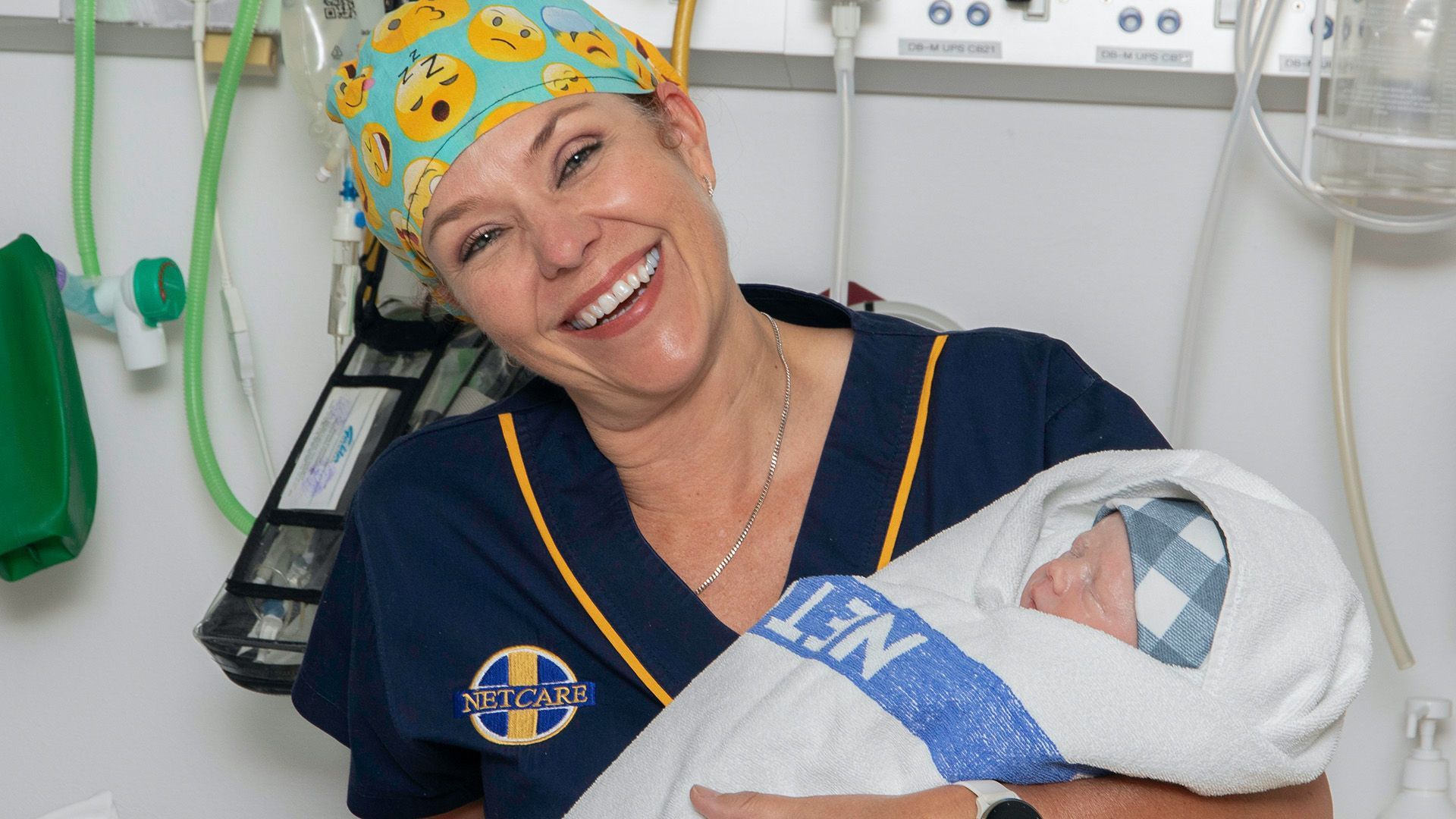
Dr Miems Kleynhans, an obstetrician and gynaecologist practising at Netcare Pretoria East Hospital, says that misinformation, particularly on social media and opinion-based sites, can leave expectant parents anxious and uncertain about choices that are best made with a trusted healthcare professional.
Tips for an informed, confusion-free pregnancy
Pregnancy comes with many firsts – the first scan, the first flutter that makes you stop mid-sentence. That first late-night panic when you Google “Is this normal?” and fall down a rabbit hole of conflicting advice. While the internet is often the first place people turn for answers, pregnancy is a time when what is trending online is not necessarily the right advice for you.
“Search engines are designed to show you generalised results based on what is popular, what is programmed to rank higher, and what is paid to be prioritised,” says Dr Miems Kleynhans, an obstetrician and gynaecologist practising at Netcare Pretoria East Hospital.
“Your doctor, on the other hand, knows your history, has studied your test and scan results, and draws on evidence-based medical information and clinical experience to provide you with the most accurate advice possible. It’s a dedicated, one-on-one conversation that is specific to you, rather than a one-sided online interaction.”
Keep it real, keep it safe:
Practical ways to stay informed
Dr Kleynhans recommends simple, practical steps for managing information during pregnancy.
- Choose a trusted gynaecologist and obstetrician you feel comfortable with.
- Attend an antenatal class for reliable, practical guidance.
- Keep a running list of questions and bring them to your next appointment.
- Be cautious with pregnancy content on social media, where opinions can sound like facts.
- Ask your doctor about recommended preventative care, including vaccinations.
- If you are really worried, call your doctor or the labour or maternity ward at your chosen hospital.
The hidden cost of online advice
Dr Kleynhans says one of the biggest challenges she sees in modern pregnancy care is the overload of online information and the anxiety it can trigger.
“The more you read, the more you feel like you need to control every detail of your experience – especially around a birth plan. It is important to remember that while birth is a very special moment, it is still a medical event. No two births are the same, and it is impossible to predict precisely how yours will unfold. We will always respect your preferences where we can, but it’s also important to manage your expectations and be mentally prepared for change if needed.
“Your birth plan is not a test that you pass or fail. The goal isn’t the perfectly curated delivery – it is taking a healthy baby home. Our main focus is on that and on making sure that you are safe and well too,” she says.
Tangible, definitive trust
Dr Kleynhans points out that online searches and social media feeds often amplify negative experiences, unintentionally escalating fear rather than providing fact-based information women can rely on.
She says that a strong relationship with a healthcare professional, such as a gynaecologist or obstetrician, creates a safe space to ask questions, raise concerns early, and receive trusted advice.
“When you know your doctor, and your doctor knows you, it becomes much easier to separate normal pregnancy changes from warning signs and to make good decisions calmly,” she says. “It also means you’re not alone with your questions at 2 am, combing through multiple search results and trying to guess which one applies to you, if any.”
Avoiding internet-induced panic
Dr Kleynhans says that bleeding is one of the symptoms that can cause immediate panic early in pregnancy and is one of the most common triggers for urgent online searches.
“Spotting during pregnancy can understandably be frightening, but it is common in early pregnancy, and it’s better to contact your doctor for guidance rather than spiralling into fear.”
She adds that while every pregnancy is different, there are situations where women should not delay seeking care. “If bleeding is accompanied by pain, or if it occurs after 26 weeks and if you cannot establish contact with your doctor, go straight to the maternity ward rather than the emergency room. They will be able to contact the doctor and provide you with the most appropriate healthcare support,” she says.
Why ‘trending’ isn’t the same as ‘true’
Dr Kleynhans says misinformation, particularly on social media and opinion-based sites, can leave expectant parents anxious and uncertain about choices that are best made with a trusted clinician.
“We see this around vaccination, for example. Parents are trying to do the right thing, but they’re exposed to content that’s designed to provoke strong reactions, not to provide balanced medical guidance.”
She notes that respiratory syncytial virus (RSV) is a grave concern for babies, and that prevention is often discussed online in ways that can create confusion.
“RSV can make very young babies seriously unwell, yet some patients are hesitant about recommended prevention measures because of what they’ve seen online. This is exactly why a trusted relationship with your gynae and obstetrician matters – you deserve information that’s evidence-based, up to date, and specific to you and your baby.”
“Don’t let the internet have the biggest say in your pregnancy – find a doctor and facility you feel comfortable with. As healthcare professionals, we have your best interests at heart, and we want to see you leave with a smile and a healthy baby. It’s an honour for us to play our part in that journey,” concludes Dr Kleynhans.