Complex voice box surgery for advanced cancer offers second chance
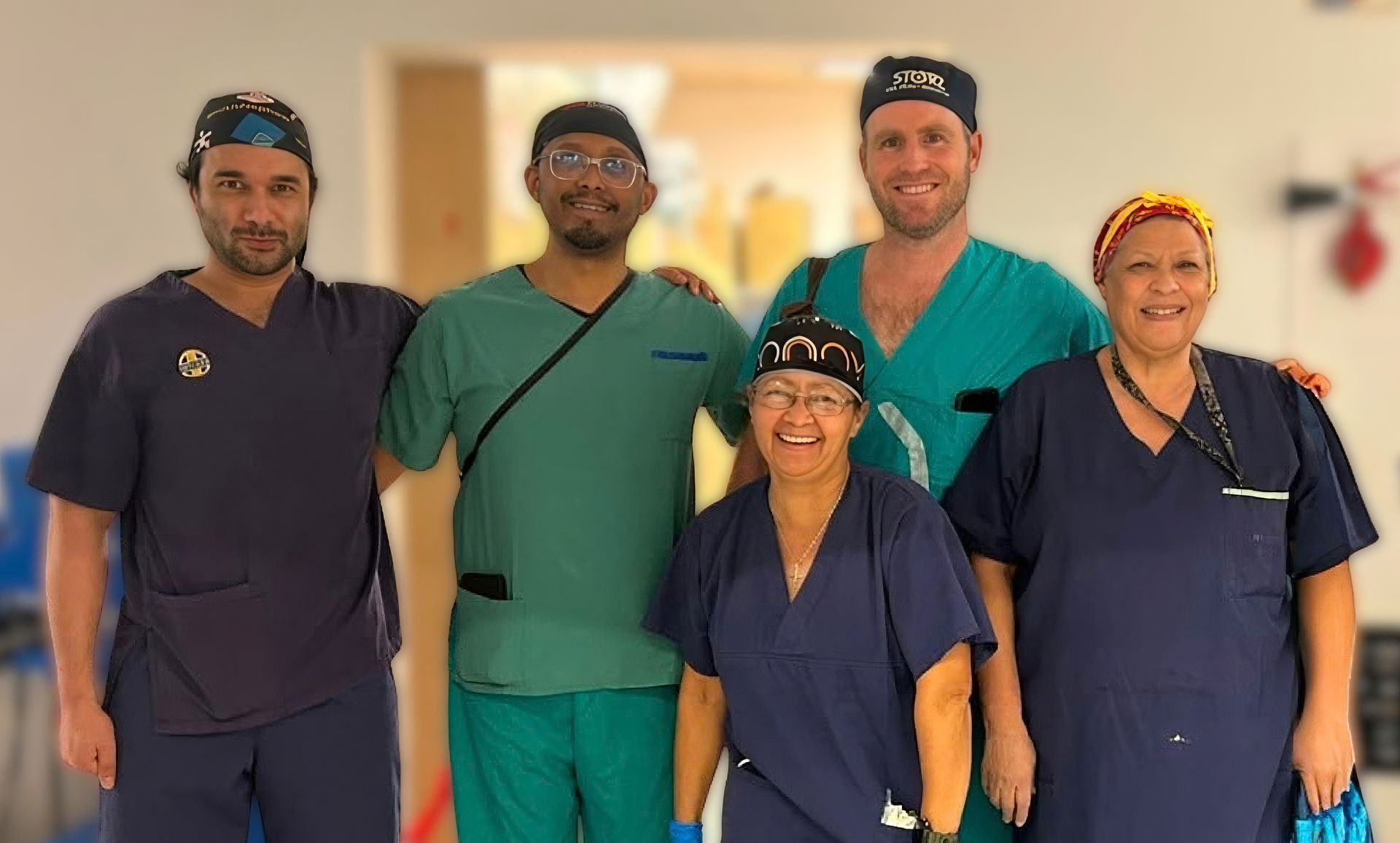
Anaesthetist Dr Ashraf Petersen, ENT surgeons Dr Vincent Pretorius and Dr Matthew White, who recently performed the complex laryngectomy neck dissection procedure at Netcare N1 City Hospital, with Sister Wendy Hendricks and Sister Caroline van Zilla.
ENT surgeons team up for surgical component of multimodal treatment
The surgical removal of the larynx can significantly improve the chances of survival for someone with advanced cancer of the voice box. Although this might offer the affected person another chance at life, it comes at the cost of the natural ability to speak. However, by implanting a speech valve during the same complex procedure, ENT surgeons can also help the person to speak again to a certain degree.
“Often, the first noticeable signs of a cancer of the larynx include persistent hoarseness lasting longer than two to three weeks, sometimes with referred ear pain on the same side as the tumour,” says ear, nose and throat surgeon Dr Vincent Pretorius, who practises at Netcare N1 City Hospital.
“When these symptoms are noted, especially in men over 60 with a history of smoking and/or excessive alcohol use, general practitioners should regard this presentation as requiring further investigation for a non-benign lesion of the larynx,” he explains.
Recently, Dr Pretorius and Dr Matthew White, a specialist otorhinolaryngologist and head and neck surgeon with a particular focus on complex surgery and head and neck oncology, teamed up to perform a highly complex laryngectomy and neck dissection at Netcare N1 City Hospital for a person diagnosed with advanced stage T4 laryngeal cancer.
Radio-imaging and a tissue biopsy with histological confirmation revealed squamous cell carcinoma of the larynx. Tumour size, or T stage, and location predict the possibility of spread to nearby lymph node groups. In this case, there was an estimated 15 to 20% chance of regional spread.
“Advanced cancers such as these tend to require multimodal treatment, combining surgery with chemotherapy, radiotherapy or, in some cases, both, to offer the best chance of a cure. In this instance, the person’s vocal cord on one side was affected by the tumour, and their voice box would never regain its function,” Dr Pretorius explains.
Dr White’s experience with complex head and neck surgery in a team that regularly performs advanced procedures, including total and partial laryngectomy, oropharyngeal surgery, neck dissection and microvascular reconstructive surgery, was particularly valuable for this intricate operation.
He leads a multidisciplinary head and neck service at Netcare UCT Private Academic Hospital, as well as leading the surgical head and neck subspecialty discipline at the University of Cape Town (UCT), based at Groote Schuur Hospital. Together with Professor Johan Fagan, Dr White runs a subspecialist fellowship programme at UCT to develop the next generation of head and neck surgeons.
Dr Pretorius explains the surgery in the context of multimodal treatment. “There is a limit to how much radiotherapy a person can have in their lifetime. When cancer has progressed to this extent, the amount of chemotherapy and radiotherapy needed for curative treatment can be minimised by removing the person’s dysfunctional voice box and the lymph nodes that drain it. This leaves open the possibility of a second round of therapy if the cancer were to recur in future.”
As with all surgery, the possible risks, pros, and cons of laryngectomy and neck dissection are discussed with the person and their significant other, supporting them in making an informed decision about whether to proceed with the surgery.
“Although it can be lifesaving as part of cancer treatment, the side effects of this surgery include breathing through a stoma in the neck rather than through the nose and mouth after surgery, which means the person loses the ability to smell and taste, and generally the ability to speak too,” Dr Pretorius says.
“With the advanced stage of this type of cancer, the voice is already severely impaired due to the cancer, and normal voice will never be regained irrespective of the form of treatment chosen.”
For most people, the prospect of losing their natural voice is understandably one of the most difficult aspects of facing this surgery. The ability to communicate verbally again can therefore make an important difference to a person’s adjustment and quality of life after treatment.
“With the first procedure of this kind at Netcare N1 City Hospital, Dr White and I were able to implant a tracheoesophageal speech valve, which makes it possible to produce sound from the throat and mouth as the person exhales. With dedication to rehabilitation and speech therapy, the patient can potentially communicate verbally again.
“This is truly a team effort involving many people, from theatre nursing staff and post-operative care staff to speech therapists, physiotherapists and dietitians, as well as long term care from the oncology team as well,” adds Dr Pretorius.
The procedure marks the introduction of this highly specialised head and neck surgery at Netcare N1 City Hospital, expanding the range of complex cancer treatment and multidisciplinary care available at the hospital before, during and after surgery.
Netcare N1 City Hospital general manager Sifiso Mdluli congratulated the team, thanking Dr Pretorius and visiting specialist Dr White for introducing the highly intricate procedure for patients in the surrounding communities who may need it as part of their treatment.
“Under the leadership of Dr Pretorius, the medical professionals and theatre staff put in a great deal of preparation and careful planning to ensure this crucial procedure proceeded smoothly, with Dr White’s experience providing welcome assurance. Ultimately, all of that preparation was directed towards giving this person the best possible chance of successful treatment and life beyond cancer,” Mdluli concludes.