When the basics matter most
Turning an extraordinary workplace injury into an extraordinary recovery
It was only his first week back in Cape Town after relocating from Johannesburg to join the Level 1 Trauma Centre at Netcare Christiaan Barnard Memorial Hospital when specialist general and vascular surgeon Dr Sanju Sobnach received a telephone call describing an extraordinary penetrating injury.
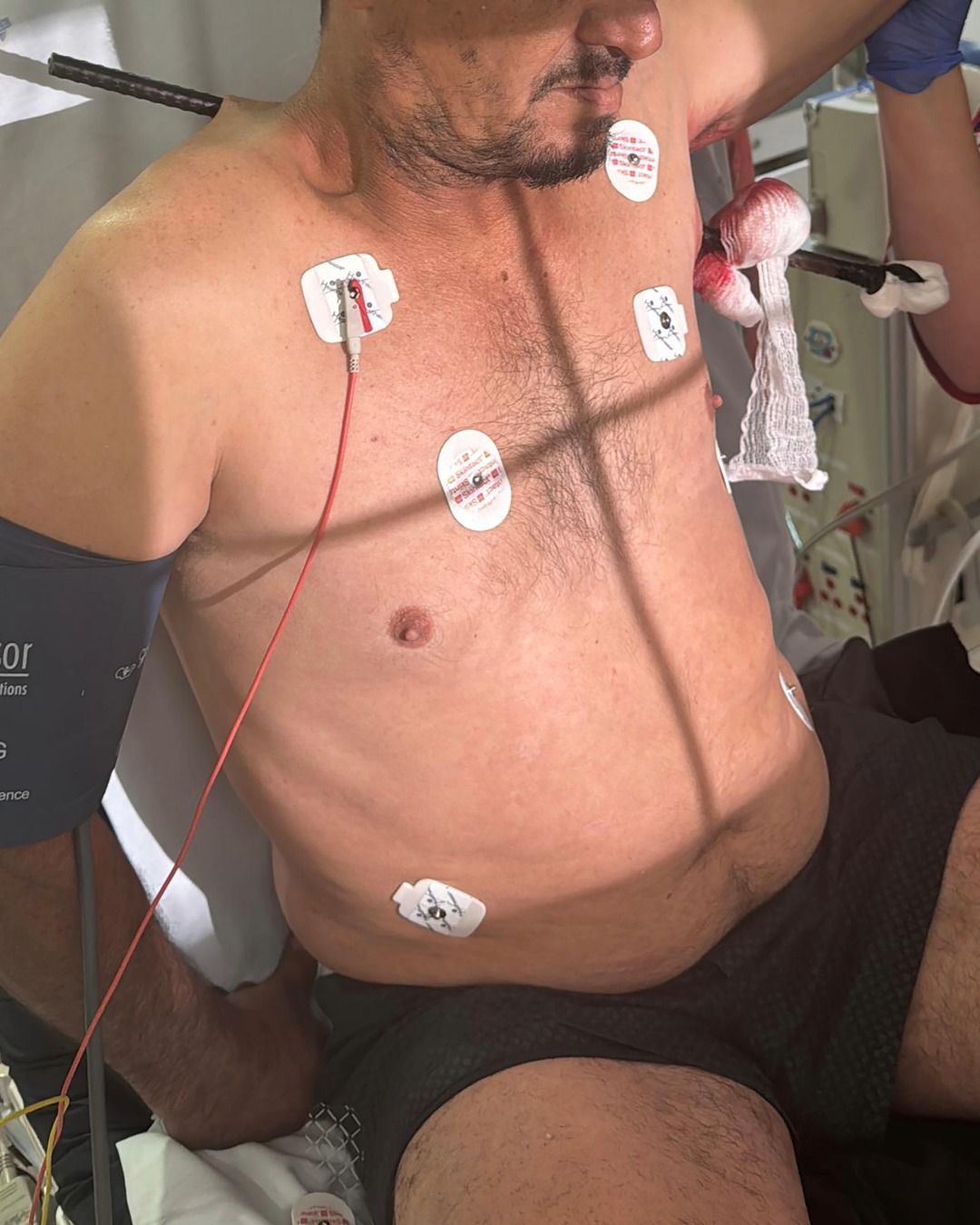
Assistant mechanic Theunis du Plessis was hard at work when the ladder he was standing on suddenly slipped, sending him crashing into a metal stand. A steel reinforcing rod protruding from the stand entered under his arm, passed through his chest and exited his opposite shoulder. It presented one of the most complex trauma scenarios Dr Sobnach and his team had ever managed.
For many people, the injury itself would have dominated their thoughts. For Dr Sobnach, his first concern was ensuring that the rod never moved.
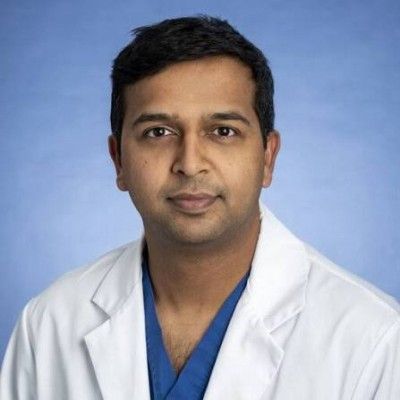
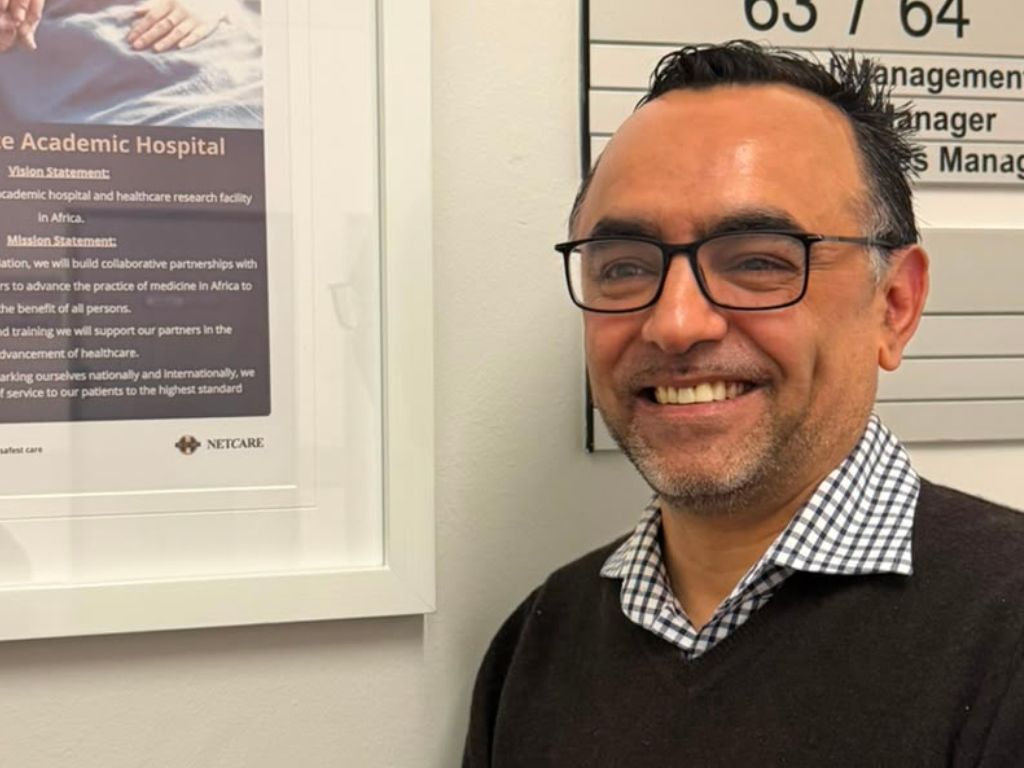
Dr Sanju Sobnach, specialist general and vascular surgeon (Photo: LinkedIn)
Drawing on years of experience managing complex traumatic injuries, as well as previous research with Professor Andrew Nicol on the management of retained penetrating objects, Dr Sobnach immediately instructed the rescue teams at the scene not to move, twist or attempt to remove the steel rod under any circumstances.
“The fire and rescue personnel and paramedics caring for Mr Du Plessis deserve enormous credit for the discipline they showed at the scene,” says Dr Sobnach. “They understood exactly what was required and followed the instructions perfectly. By the time Mr Du Plessis reached us, they had given him the best possible chance.”
As the ambulance made its way to Netcare Christiaan Barnard Memorial Hospital, planning inside the trauma unit was already well underway. Before Mr Du Plessis even entered the trauma unit, Dr Sobnach gathered the team for a briefing. “The injury is imposing,” he remembers telling them. “Do not let the enormity of the task distract you from the basics, or we will lose the patient.”
It was a simple instruction, but it became the guiding principle for every decision that followed.
Calm under extraordinary circumstances
Mr Du Plessis arrived awake, alert and remarkably composed. Despite a steel rod passing through his body, he remained calm, spoke to the team and was able to open and close both hands when asked, providing immediate reassurance that he had avoided devastating neurological injury.
“When I fell, I realised there was something beneath me. I tried to free myself, but I couldn’t. That’s when I realised the rod had gone right through my body. All I could do was lie there and wait for the paramedics and the fire and rescue team. They couldn’t believe I was still alive. They had to cut the rod to get me into the ambulance, but they were incredibly careful not to move it. I can still remember the hissing sound from the hole in my chest,” recalls Mr Du Plessis.
“He never panicked,” recalls Dr Sobnach. “He was understanding, cooperative and trusted everyone looking after him. That made an incredibly complex situation much easier to manage.”
The hissing sound was more than just a vivid memory for Mr Du Plessis. For the trauma team, it was a constant reminder of how precarious the situation remained. Every slight movement allowed air to escape through the wounds where the rod entered and exited his body. “It was like listening to a slow puncture in a tyre,” says Dr Sobnach.
Given such an extraordinary injury, it would have been easy to focus on getting the steel rod out quickly. Instead, the trauma team deliberately slowed everything down.
Planning before action
Even obtaining a CT scan required careful planning. Because the rod protruded from both sides of Mr Du Plessis’s body, he could not lie flat inside the scanner. Supported by pillows, he was carefully positioned in a semi-seated, semi-reclined position while imaging specialists performed a CT angiogram, allowing the team to determine the rod’s precise path without disturbing it.
The scan revealed that although the rod had passed through his underarm and chest before exiting through the opposite upper shoulder, it had narrowly missed the major blood vessels. It was exactly the kind of complex, high-risk injury for which Level 1 Trauma Centres are designed, bringing together multidisciplinary specialist expertise in imaging, anaesthesia, surgery and critical care for a single, coordinated response.
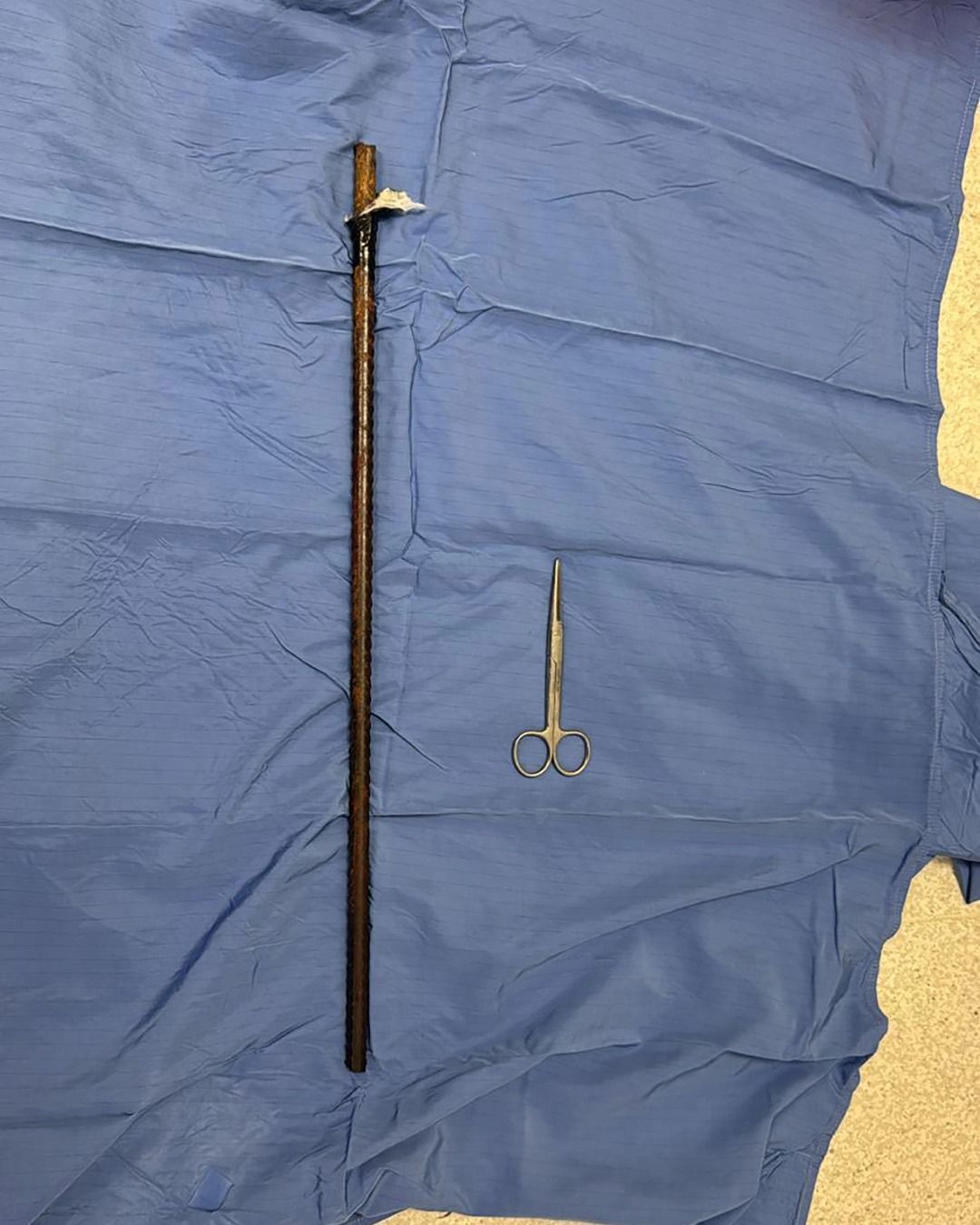
Mr Du Plessis was also a heavy smoker, which may have reduced the resilience of his lungs. The steel rod itself was somewhat rusty, posing a significant risk of infection, and its ridged surface made removal considerably more difficult than it would have been with a smooth object.
Even administering the anaesthetic required careful planning. Unable to lie flat, Mr Du Plessis was intubated while seated, with the anaesthetist taking extraordinary care not to disturb the rod.
Every decision mattered
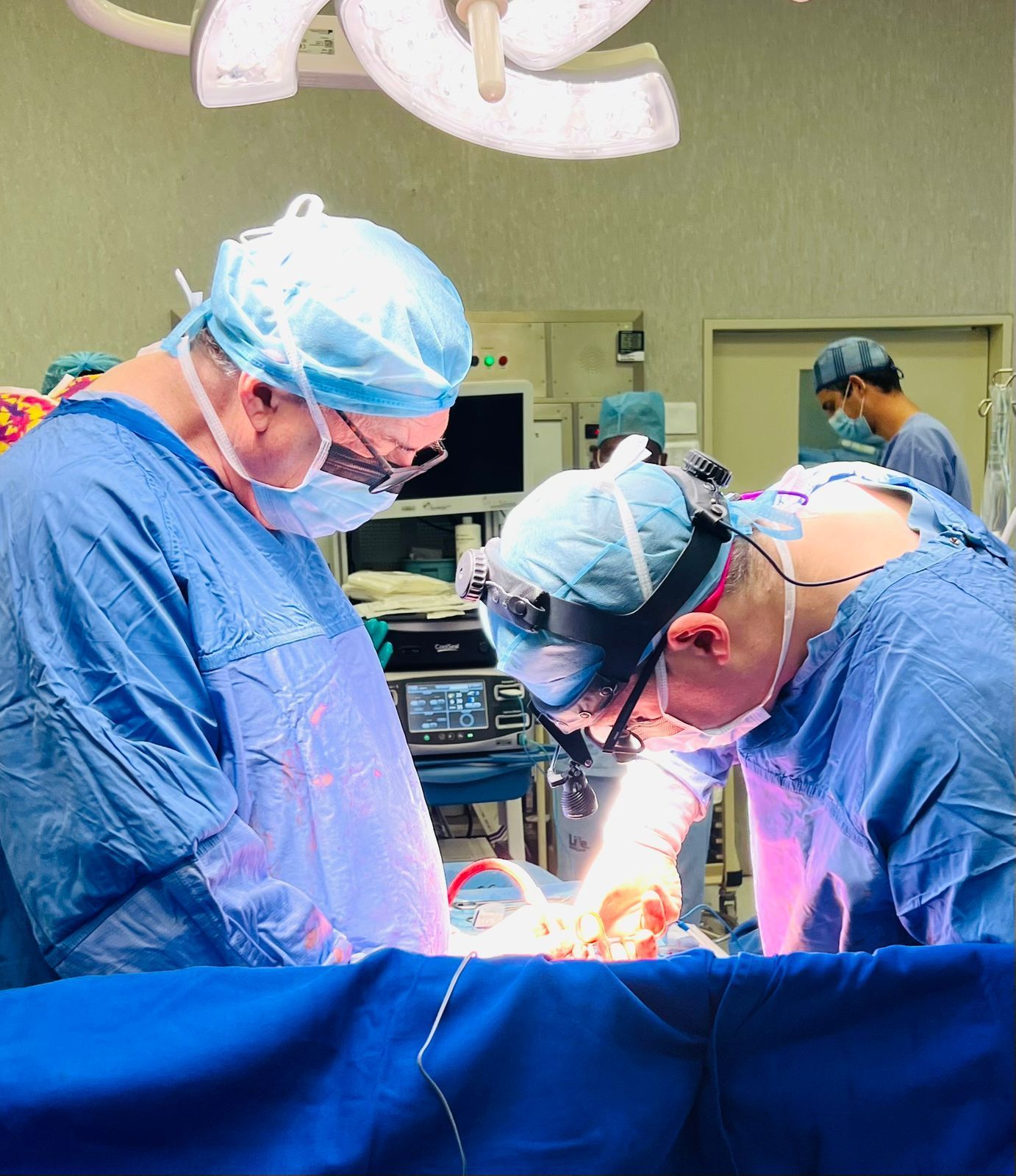
In theatre, Dr Sobnach and his team carefully exposed the injured areas before making another deliberate decision. Rather than removing the rod immediately, they waited to see whether a damaged blood vessel would begin to bleed. The rod may have been temporarily plugging the injured vessel, and pulling it out too soon could have triggered catastrophic haemorrhage. About ten minutes later, slow bleeding began, exactly as anticipated, allowing the team to proceed in a controlled and prepared way.
Only then did the surgeons slowly withdraw the rod in a perfectly straight line, without the slightest twisting movement. The operation unfolded exactly as planned.
After surgery, Mr Du Plessis spent a day in intensive care before being transferred to a general ward the following day. Because of the condition of the steel rod, preventing infection became a major focus of his care, with tetanus prophylaxis, antibiotics and antifungal treatment forming part of his recovery. Five days later, he was discharged from the hospital.
“I’m doing well now, and I’m incredibly grateful. This is the closest I've ever come to dying, and I've had a few close calls. The rescue team was outstanding, and the team at the hospital was strict, but they were absolutely excellent. I honestly don’t think I’d be here today without them,” says Mr Du Plessis.
The real lesson
Dr Sobnach says the outcome was never about one surgeon or one operation. “It began with rescue personnel and paramedics at the mechanical workshop who understood the importance of keeping the rod completely still. It continued with careful planning before the patient even arrived at the hospital, relying on specialists from multiple disciplines working together seamlessly from the emergency department through to intensive care.
“People often ask what makes a Level 1 Trauma Centre different. It’s not about one individual or one piece of equipment. It’s about bringing together specialist expertise at every stage of a patient’s journey. In a case like this, every decision mattered, and every team member had a critical role to play when his life was in the balance,” says Dr Sobnach.
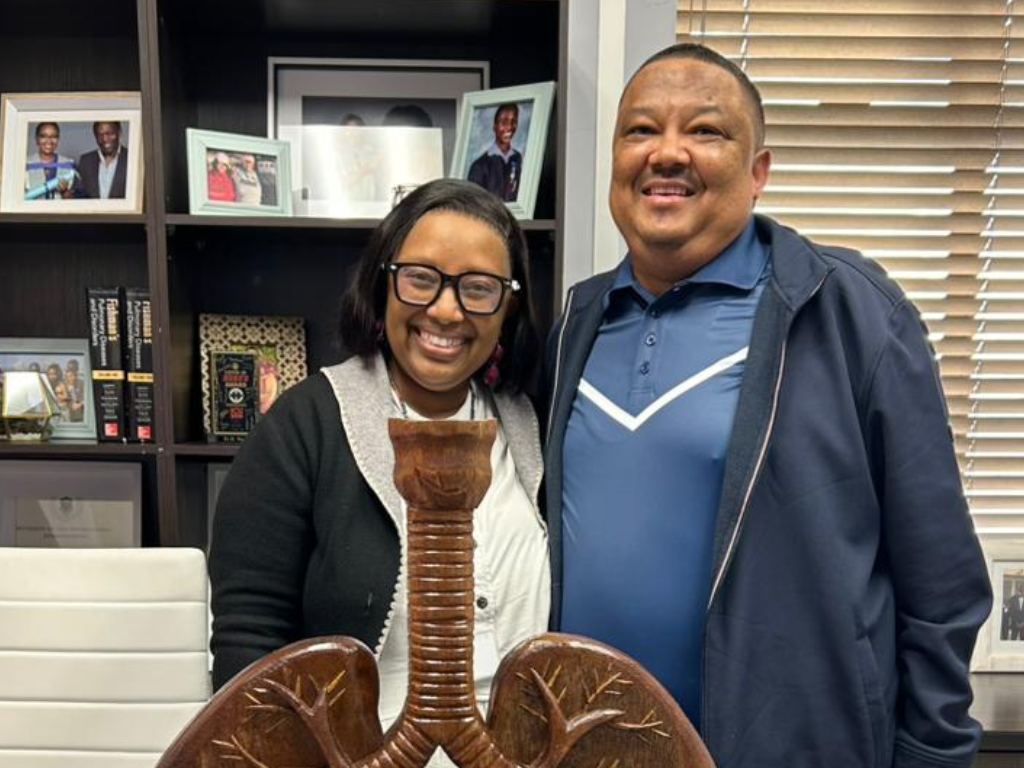
For Mr Du Plessis’s colleague, Elsabe de Villiers, sales advisor at Supamac Master Mechanics, the remarkable nature of his recovery only became clear after he returned to work. She recalls him triumphantly arriving back at the workshop carrying the steel rod that had impaled him.
“Theunis has nine lives,” she says. “Just like a cat.”
Cases like this are sometimes described as miracles. Trauma specialists see them differently. Preparation, experience, disciplined teamwork, and countless decisions, each one building on the last, are what turn an extraordinary injury into an extraordinary recovery.