Lifesaving friendship leads to transplant for inclusion advocate
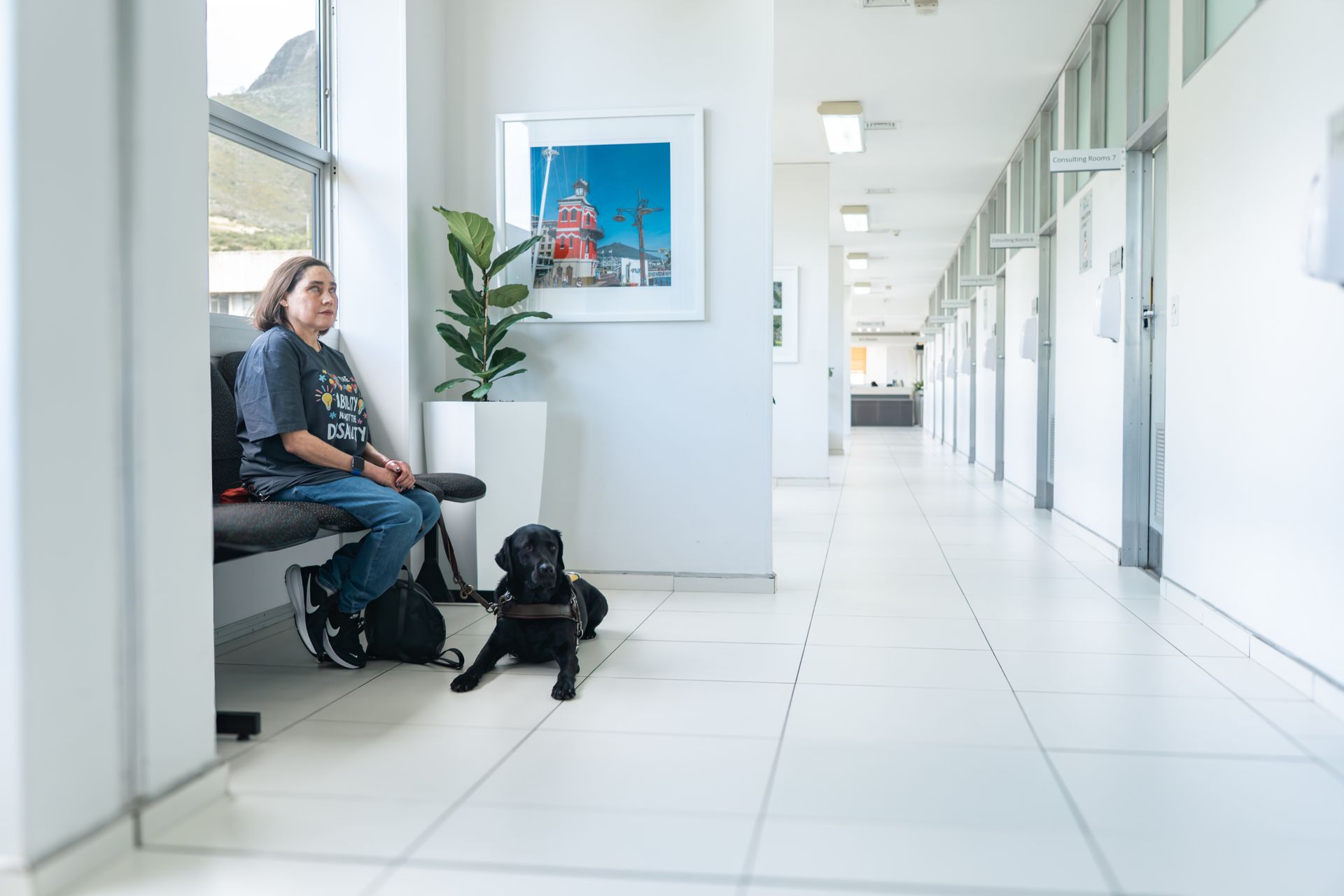
Author, public speaker and disability inclusion advocate Lois Strachan, who has type 1 diabetes, relied on dialysis after kidney failure until her university friend Melanie Harvard donated a kidney to her.
‘Dialysis allowed me to keep doing what I love’
A friendship that began more than three decades ago at university has given Lois Strachan a new life after kidney failure.
Inclusion advocate and author of A Different Way of Seeing, Lois became blind at the age of 21 as a result of type 1 diabetes. “I was diagnosed with diabetes at the age of six. My parents weren’t well informed about the risks of my condition, and I wasn’t particularly careful about controlling my diabetes when I was younger,” she says.
“My blindness is part of who I am. I use a range of tools and techniques to do things, and my guide dog Normandy helps me get around. My focus is on challenging down stereotypes surrounding disability in workplaces and society through writing, blogging, public speaking, and coaching people with disabilities to help break down barriers to inclusion.”
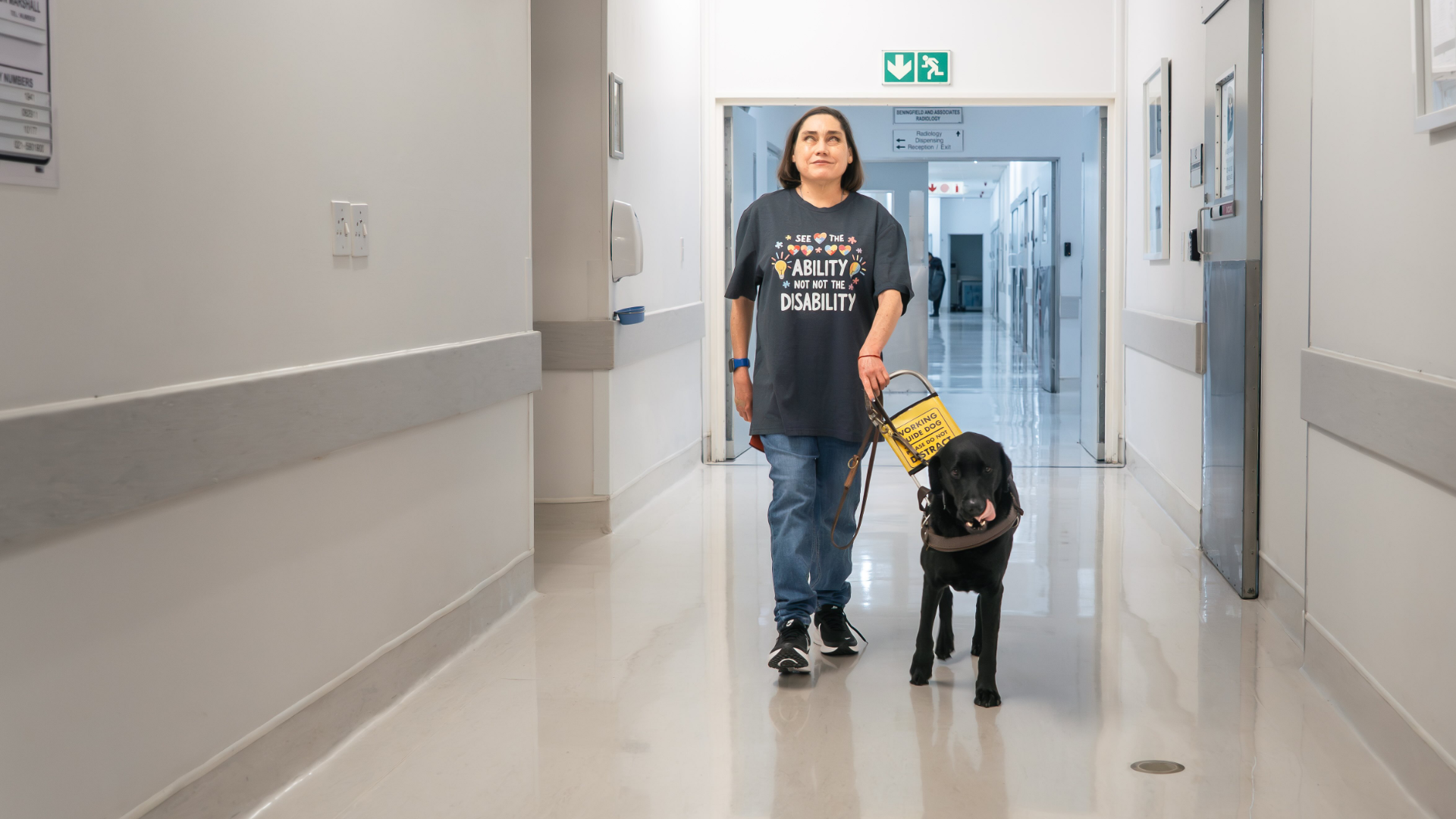
Lois Strachan, who became blind at the age of 21, is the author of A Different Way of Seeing. She is pictured with her guide dog, Normandy.
In September 2024, blood tests showed that her kidney function was deteriorating rapidly, and Lois made a clear decision to be as proactive as possible in preparing for her impending need for dialysis.
Dialysis is a therapy that purifies blood for people whose kidneys can no longer do this naturally. With 87 centres around the country, National Renal Care (NRC) provides compassionate, person-centred renal care across the patient journey, including in-centre haemodialysis, home haemodialysis, peritoneal dialysis, pre-dialysis education and support, as well as ongoing support for patients throughout their transplant process.
“Firstly, I started on a special renal diet to support my failing kidneys because I knew this would take some getting used to, and I thought it would be better not to make this change at the same time as introducing dialysis into my routine. I also had a dialysis arteriovenous graft surgically implanted at the beginning of 2025, which is a port used to connect to the dialysis machine for therapy,” she explains.
“Starting dialysis required a lot of adjustment to my everyday life. Every Monday, Wednesday and Friday, I would work until lunchtime, then go to NRC Plumstead for dialysis and get home around 7pm.”
Two weeks after Lois started dialysis, her nephrologist suggested that she might be a good candidate for a kidney transplant.
“I deferred the conversation about a transplant because I was still adjusting to my new lifestyle. About two months later, in April 2025, we started talking about the process. I took the leap and reached out to family and friends, asking if anyone would consider testing for donor compatibility. I was extremely touched when 11 people replied that they were willing to be tested.”
So began the lengthy process of meticulous tests for donor suitability; meanwhile, Lois continued her dialysis sessions and soon became a familiar face at NRC Plumstead.
“Spending so much time together at dialysis, we built a real sense of community among the patients and staff. The shared support from others’ experiences of adapting to life with kidney failure, and chatting for hours about life in general during the therapy meant a great deal to me, and I’ve kept in touch with the friends I made there since my transplant,” Lois says.
“The NRC staff were fantastic. Since I couldn’t see what was happening on the machine, someone would come and tell me anything I needed to know to help me understand my dialysis.”
In addition to dialysis services, NRC patients are supported by an app that includes their medical records and features such as exercises, meal planning, a renal plate scanner to calculate nutritional value, fluid intake tracking, and symptom monitoring.
Because Lois has diabetes, her blood glucose levels also needed careful monitoring during dialysis, as they could fall dangerously low. “Managing my blood sugar became part of the dialysis routine. The NRC team and I would keep a close eye on it throughout treatment, with my continuous glucose monitor app providing real time readings so we could respond quickly if my levels started to drop. I have such respect for the NRC Plumstead team. The care they show is amazing.”
After more than a year of medical tests, it was finally confirmed that Melanie Harvard, Lois’s friend from university days and the first person to offer to be tested, was a suitable donor. Both women were found to be healthy enough for the transplant surgery, and once all was in place, approval was sought from the Department of Health.
“On 19 May this year, we received the go-ahead, and we could schedule the surgery for three weeks’ time. Those three weeks went by in a blur. Melanie lives in KwaZulu-Natal, and she had to arrange time off work and travel to Cape Town. I had to organise my work, podcast, and blog, and arrange for someone to care for my guide dog. It all came together in time,” Lois says.
On 9 June, transplant and trauma surgeon Prof Elmin Steyn and urologist Dr Anesh Naidoo were part of the medical team that performed the successful kidney transplant at Netcare Christiaan Barnard Memorial Hospital.
“I am grateful beyond words to Melanie for this lifesaving gift of friendship, and to the entire transplant team for the extraordinary care they gave us both. The difference this has made to my life is phenomenal,” Lois says.
Melanie says she also gained something valuable in the process of donating her kidney. “Lois and I have known each other since our university days, and we reconnected years later. Somewhere along the way, friendship became family. These days there are jokes about being siblings. Perhaps that’s not entirely inaccurate. After all, most siblings share genetics; we share a kidney,” Melanie says.
“Looking back now, I realise that donating a kidney gave Lois something precious. But it gave me a deeper understanding of generosity, connection, and love. It taught me that giving and receiving are not opposites. They are part of the same circle.”
Now, Lois uses her voice to raise awareness of chronic kidney disease and organ donation through her blog, YouTube channel, and social media.
“Being diagnosed with kidney failure can be overwhelming at first, but my advice is to take it one step at a time. I will always remember that dialysis allowed me to keep doing what I love and connecting with people until my lifechanging kidney transplant,” Lois concludes.